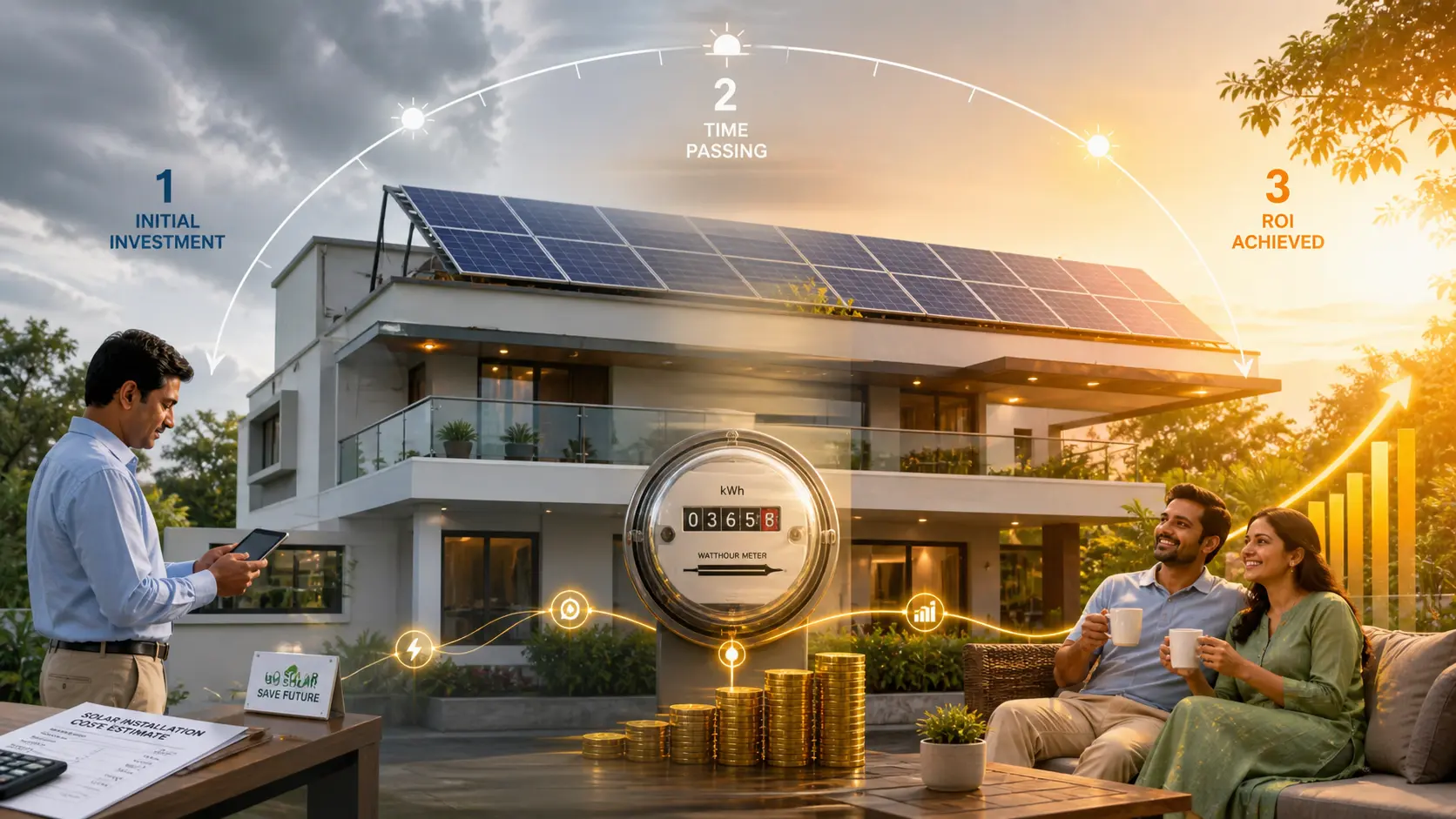
One of the biggest questions homeowners ask before installing solar is how long it takes to recover the investment. The return on investment, or ROI, depends on several factors, but solar often delivers value sooner than many expect.
What Affects Solar ROI?
Payback periods are influenced by installation cost, electricity rates, system size, incentives, and energy usage patterns.
Impact of Electricity Bills
Homes with high electricity bills often achieve faster returns because replacing expensive grid power produces larger monthly savings.
Role of Incentives
Government incentives and net metering can shorten ROI significantly by reducing effective system costs and improving savings.
System Quality Matters
Panel efficiency and system quality also matter. Higher-performing systems may cost more upfront but can generate stronger long-term returns.
Savings Timeline
In many cases, homeowners begin seeing meaningful savings immediately through lower electricity bills, while full investment recovery may occur over several years depending on conditions.
Beyond Payback
It’s important to view ROI beyond simple payback. Solar systems often continue producing savings long after the initial investment has been recovered.
Effect of Rising Energy Prices
Rising utility rates can improve returns over time as the value of self-generated electricity increases.
Low Maintenance Advantage
Maintenance costs are generally low, which supports stronger lifetime economics.
Property Value Benefits
Another factor often overlooked is property value. Solar may increase home appeal and add financial benefit beyond electricity savings alone.
Think Long-Term
Rather than focusing only on how quickly solar pays for itself, consider how much value it creates over 20 to 25 years.
Conclusion
A properly designed system is not just about payback—it is about long-term financial performance.
For a personalized solar ROI estimate based on your home and energy usage, connect with 4M Solar Solutions.