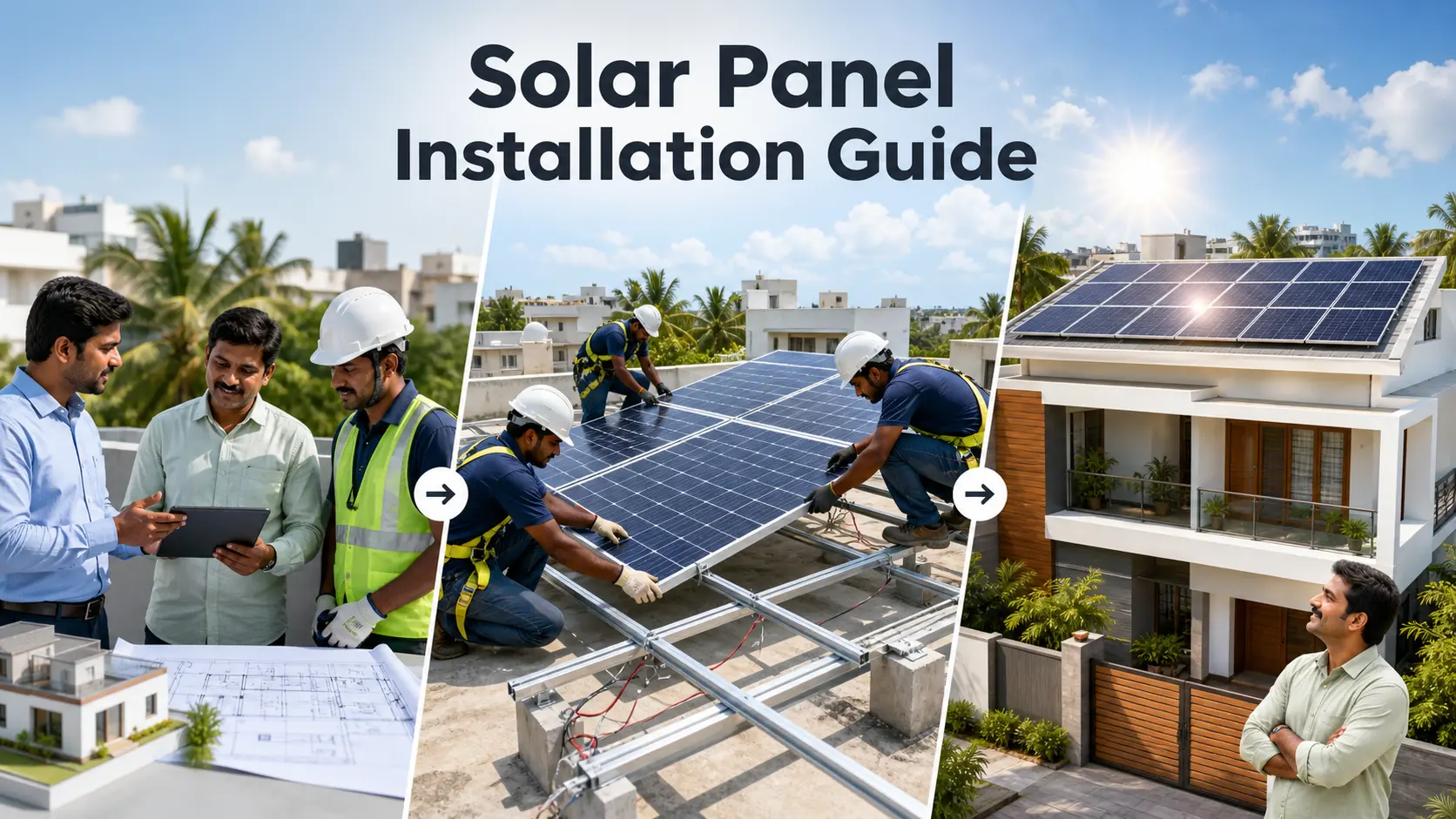
If you’re considering solar for the first time, understanding the installation process can make the transition much easier. While every home is different, most residential solar projects follow a similar path.
1. Evaluate Your Energy Needs
The first step is evaluating your energy needs. Reviewing electricity usage helps determine the system size required to meet your goals, whether reducing bills or covering most of your power needs.
2. Site Assessment
Installers examine roof condition, orientation, shading, and available space to determine whether your home is suitable for solar.
3. System Design
After that, system design begins. This includes selecting panels, inverters, mounting systems, and deciding whether battery storage is needed.
4. Permits and Approvals
Permits and approvals are often part of the process. Depending on location, utility approvals and local regulations may apply before installation starts.
5. Installation Process
Installation itself is usually faster than many expect. In many cases, rooftop systems can be installed within a few days, though timelines vary.
6. Testing and Commissioning
Once installed, the system is tested, connected, and commissioned. If net metering is available, arrangements may be made for grid connection and export credits.
7. Maintenance Basics
Beginners should also understand maintenance requirements. Solar systems generally require minimal upkeep beyond cleaning and periodic inspection.
Choosing the Right Installer
Choosing the right installer is critical. Look for experience, strong warranties, transparent pricing, and quality equipment recommendations.
Think Long-Term
It’s also important to think long term. A lower-cost system may not always deliver the best returns if performance or durability is compromised.
Conclusion
Solar installation may seem technical at first, but with the right guidance it can be a straightforward and rewarding investment.
If you’re beginning your solar journey and want expert support from assessment to installation, contact 4M Solar Solutions.